Ukagaka (伺か), the talking desktop mascots from Japan, and how they differ from Shimeji

Also in日本語한국어繁體中文简体中文EspañolDeutschPortuguês (Brasil)Français
Quick answer
Ukagaka (伺か) is a Japanese desktop mascot program that started in 2000. Its characters, called ghosts, stand at the side of your screen and talk to you in speech balloons, driven by a conversation engine, while Shimeji walk and climb all over the screen without words. Ghosts run inside a host program called baseware, today mostly SSP on Windows, with smaller projects for Mac and Linux.
Download for MacLong before desktop pets were a trend, Japan had a whole culture of characters living on the computer screen. Shimeji is one branch of it. Ukagaka (伺か) is the other big one, and fans of one often discover the other. Here is what Ukagaka is, the words that come with it, and how it compares with Shimeji.
Where Ukagaka came from
Ukagaka began on May 25, 2000, as a program called 偽ペルソナウェア with 偽春菜 (Nise-Haruna), made by an anonymous developer known as 黒衣鯖人. It changed names a few times before settling on 伺か in 2002, when other people took over its upkeep. The first host program was MATERIA, which hasn't been updated since 2002.
The idea that made it last is the same one behind Shimeji: anyone could make a character for it. Fans have written thousands since.
The words you'll meet
Ukagaka has its own vocabulary:
- Ghost: the character's personality and lines, and in everyday use the whole character package.
- Shell: how the character looks, made of surfaces, one picture per expression.
- Balloon: the speech bubble the character talks in.
- SHIORI: the conversation engine that decides what the ghost says.
- Baseware: the host program that runs ghosts.
The best-known ghost is the original pair, Sakura (さくら) and Unyū (うにゅう). Two characters chatting with each other and with you is the classic Ukagaka setup.
Ukagaka and Shimeji side by side
| Ukagaka (伺か) | Shimeji | |
|---|---|---|
| What the characters do | Stand at the side of the screen and talk in balloons | Walk, climb, sit and get thrown around the screen |
| Words | Lots: ghosts chat with each other and with you | None, they act instead |
| A character is | A ghost (personality) plus a shell (look) | A pack of pose images plus two settings files |
| Host program | Baseware such as SSP | Shimeji-ee on Windows, Shimejiko on Mac |
| Started | 2000 | More than fifteen years ago |
They scratch the same itch, a character keeping you company on your computer, in very different ways. Many fans keep both.
How people run Ukagaka today
- SSP is the standard baseware. Its official site lists version 2.9.31 for Windows, also usable with Wine.
- CROW is another Windows baseware.
- On a Mac, the SSP site links two young projects: Ourin (macOS 13 or later, early in development) and Utatane (macOS 14 or later, which says it isn't fully SSP compatible and that some ghosts need Wine).
- On Linux, ninix-kagari continues the ninix project, though its own readme recommends SSP where SSP runs.
- On Android, UKA-droid.
Shimeji on a Mac
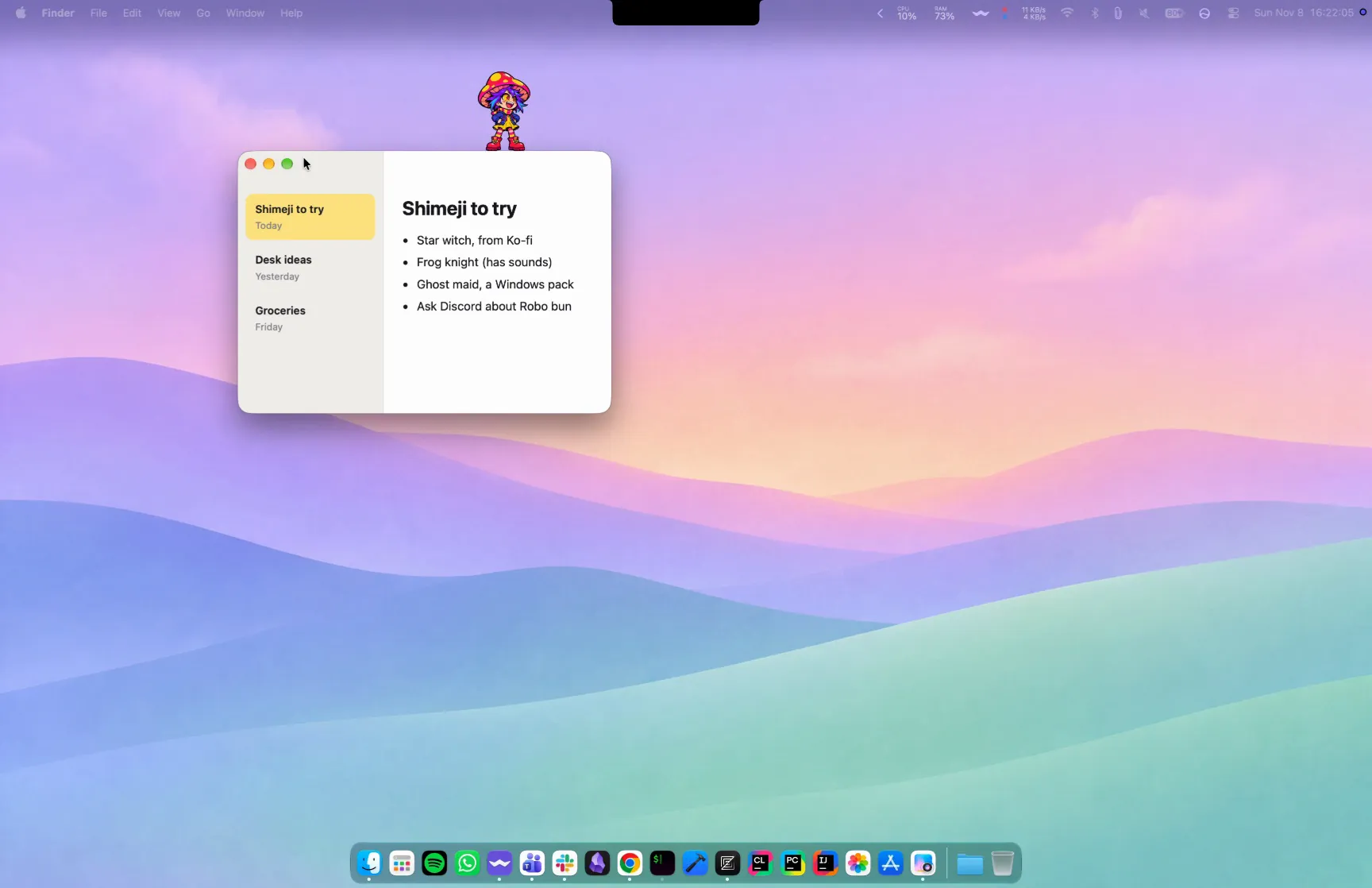
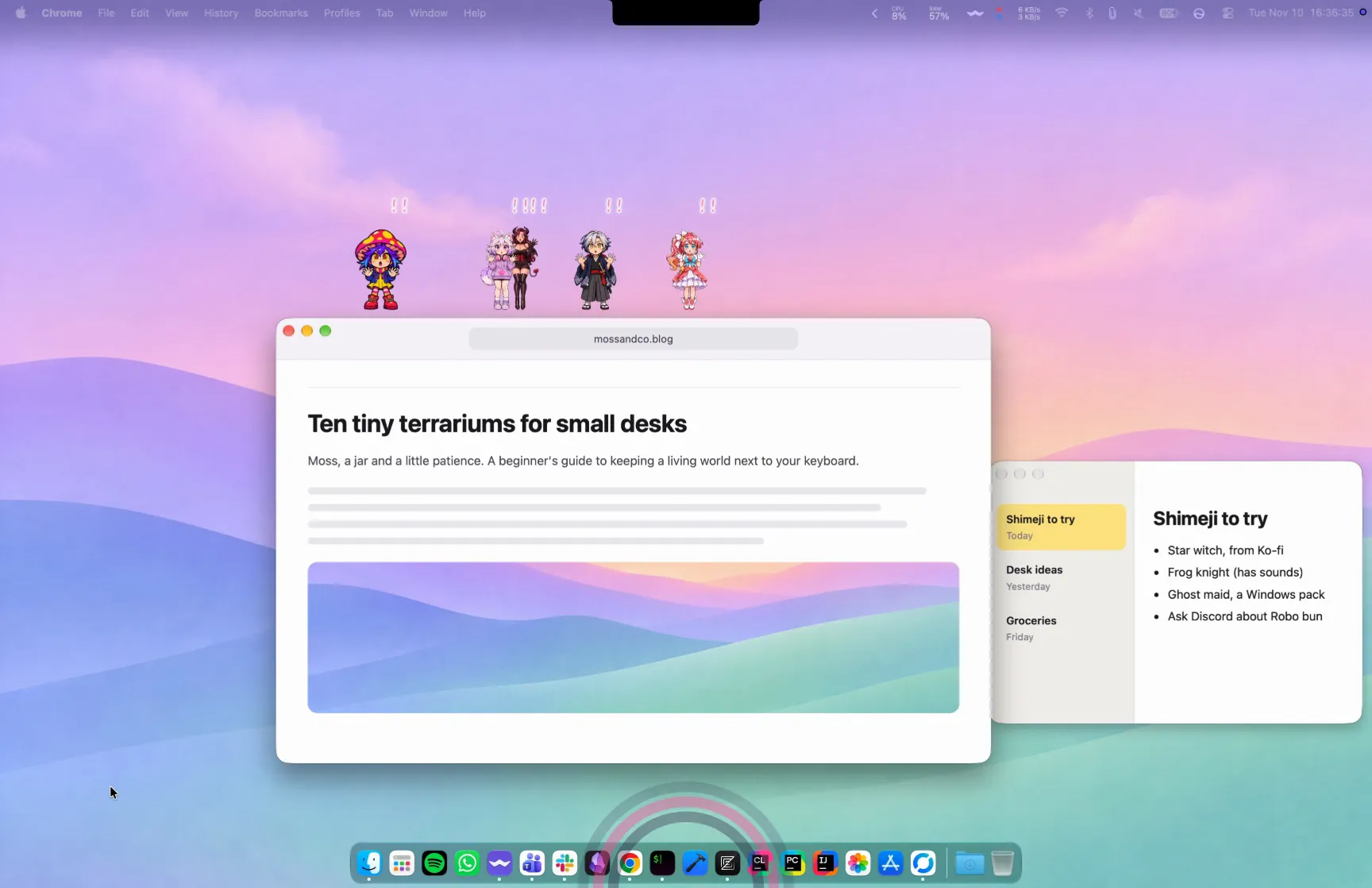
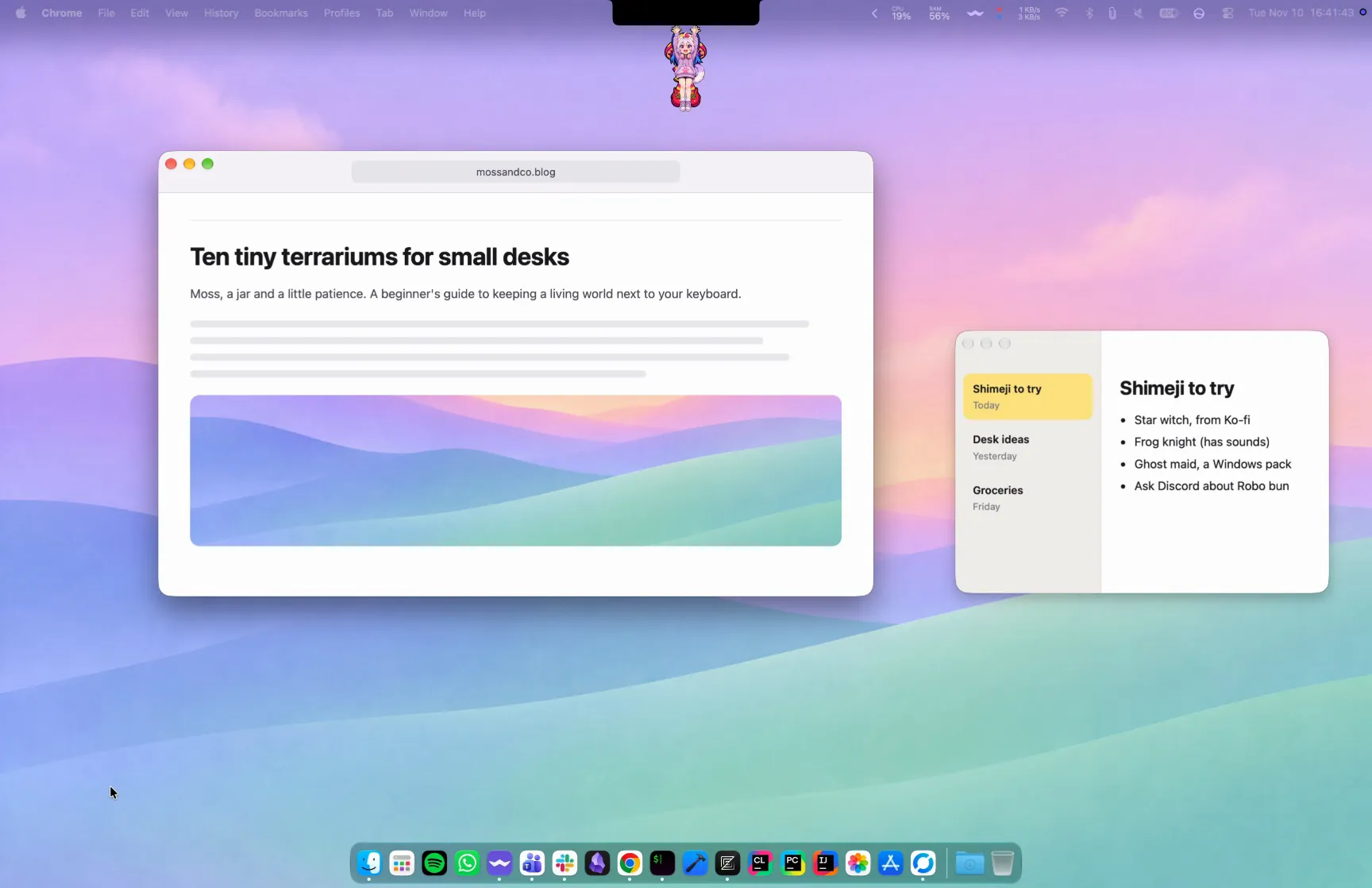
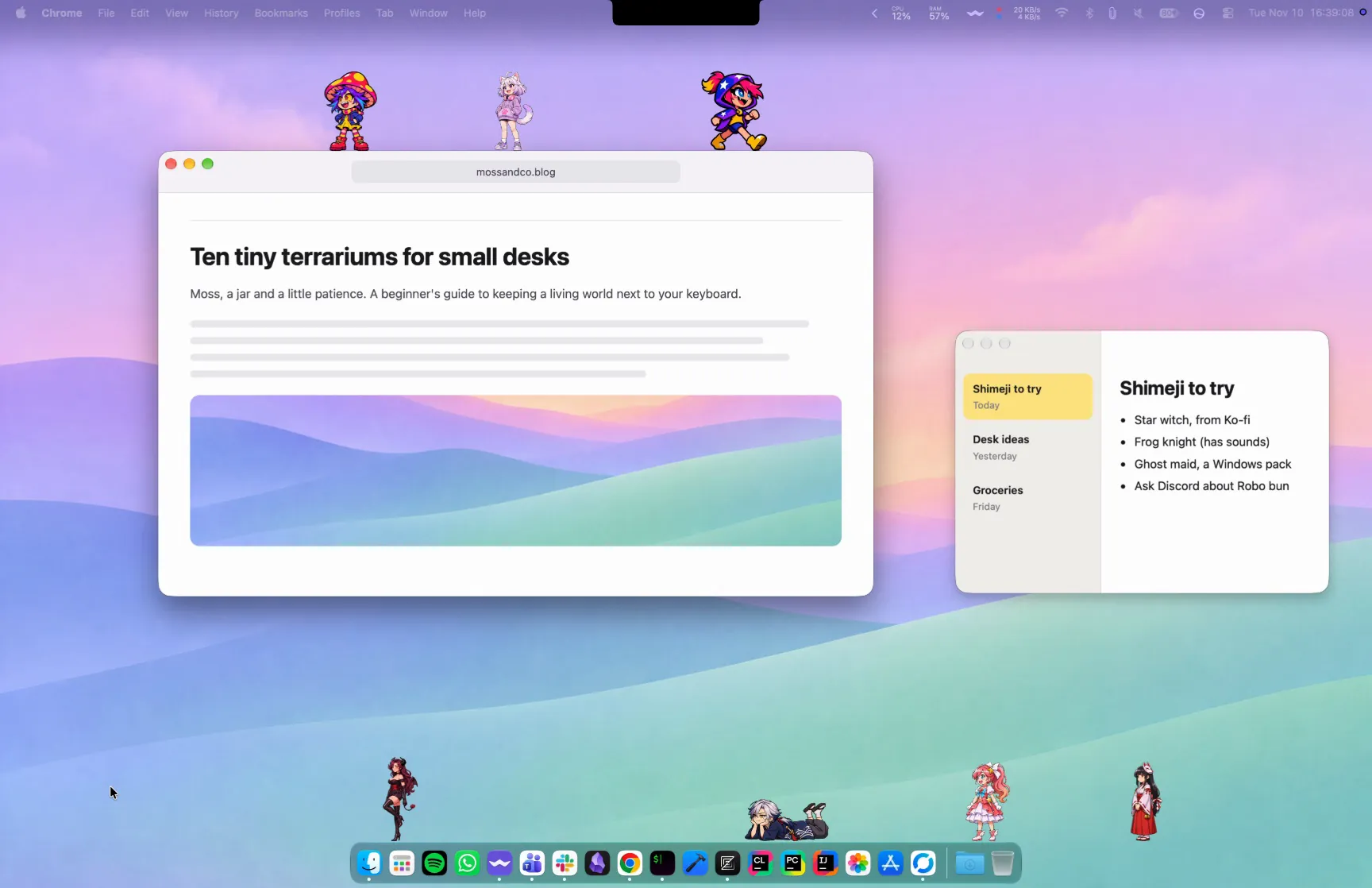
If walking characters are what you're after, Shimejiko runs Shimeji packs natively on a Mac, no Java or Wine. Japanese packs with their original settings files work too. It doesn't run Ukagaka ghosts: the two formats are different.
What is a Shimeji? · How to get Shimeji on a Mac
Questions
What is a ghost in Ukagaka?
A ghost is a character for Ukagaka: its personality, its lines and the conversation engine that picks them, usually bundled with at least one shell, the pictures that show how it looks.
Is Ukagaka free?
The baseware and most ghosts are free, made and shared by fans.
Can I run Ukagaka on a Mac?
There are Mac projects linked from the SSP site, Ourin and Utatane, but both are young and not fully compatible. SSP itself also runs on a Mac through Wine.
Can Shimejiko run Ukagaka ghosts?
No. Shimejiko runs Shimeji packs, the walking characters. Ukagaka ghosts need a baseware such as SSP.
What's the difference between Ukagaka and Shimeji?
Ukagaka characters talk to you from the side of the screen; Shimeji wander all over it without words.