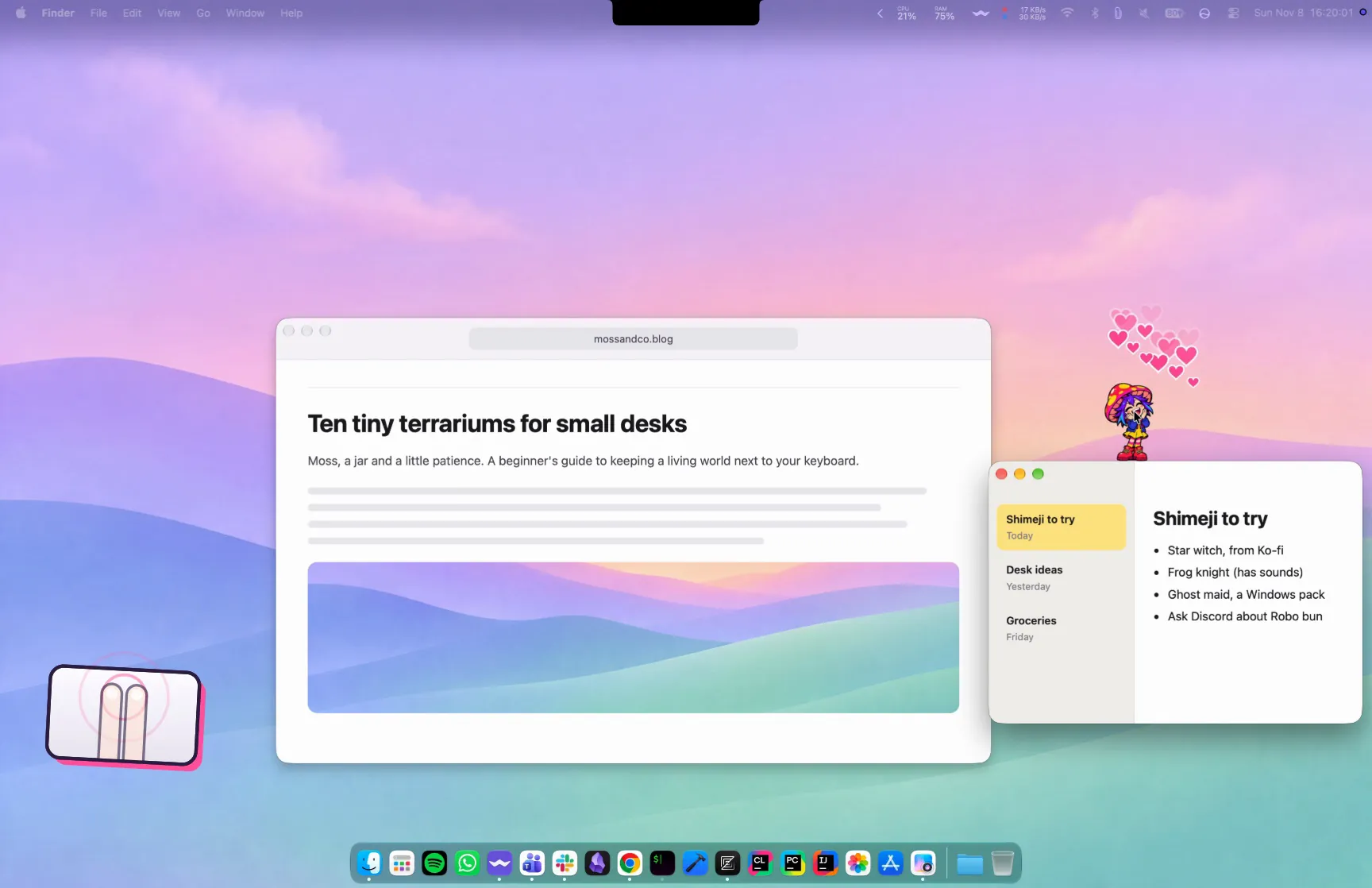
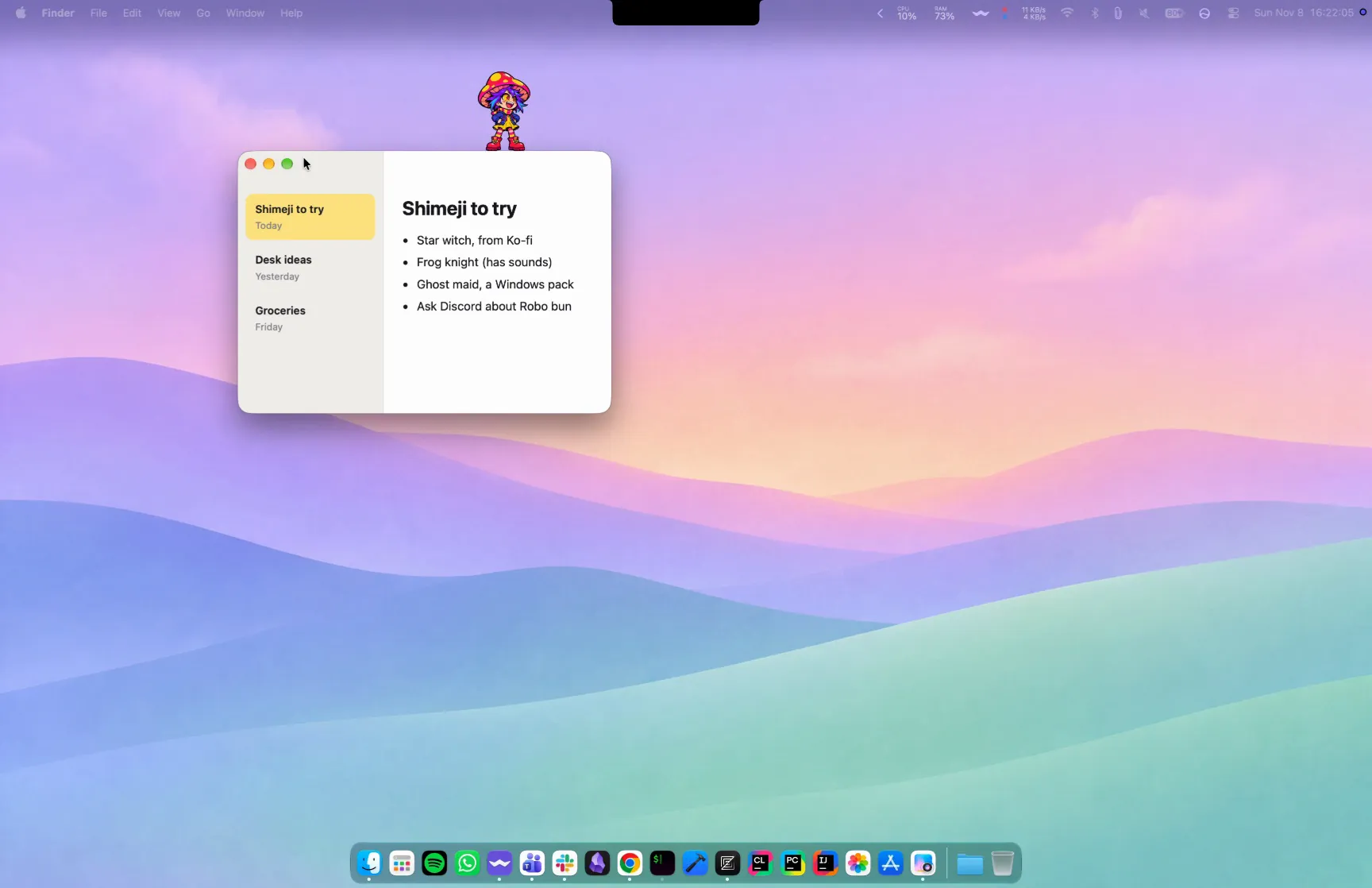
How to use a desktop pet while working or studying on Mac

Also in日本語한국어繁體中文简体中文EspañolDeutschPortuguês (Brasil)Français
Quick answer
A desktop companion can make your Mac feel more personal. Set up Shimejiko with calm mode, separate sound controls and a reliable hide routine for reading, studying and screen sharing.
Download for MacA desktop pet while studying can be a small bit of company beside your notes. With Shimejiko, start with one character, switch on Calm mode and learn the hide shortcut before settling in. The aim is a desktop companion you enjoy having around, not a promise of better concentration or higher grades.
How do you make a desktop companion quieter?
Open Shimejiko's mushroom menu in the macOS menu bar and turn on Calm mode. It:
- Sets movement speed to 70% of your chosen speed.
- Stops characters from making new copies of themselves.
- Disables window throwing.
Characters remain visible and can still move. Calm mode is not a freeze button, and it does not mute pack sounds. For those, open Settings → Characters and turn off Sounds. If you also want to pause Mac magic reactions, the menu has a separate Pause Mac magic switch.
Every pack has its own personality. Try your chosen character beside a real document, then adjust sounds and movement to suit your day.
Where should you put a desktop pet while studying?
Start with one character rather than filling the screen. Drag it away from the paragraph, spreadsheet cell or button you need. Treat that as a starting position, not a promise it will stay parked there: characters can wander.
Most of the desktop remains clickable. Shimejiko handles clicks on character pixels and interactive app decorations, while the transparent areas let clicks reach the app beneath. A character directly over a control can still get in the way. Move it or hide everyone when you need an unobstructed view.
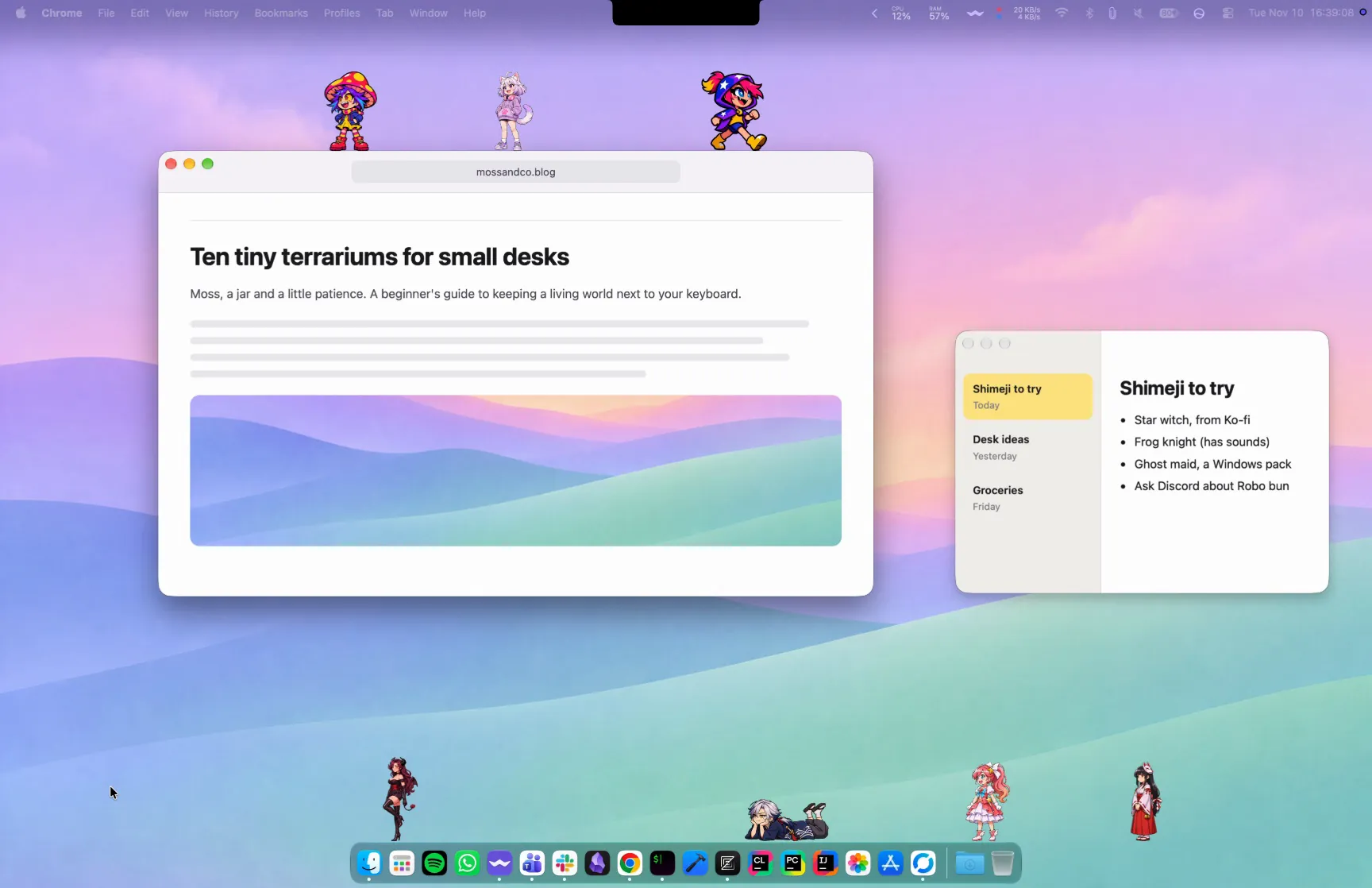
This existing app recording shows the full crew with Pro, not Calm mode. It gives you a feel for how characters share the desktop; your quiet setup can be much simpler.
How do you hide everyone before sharing your screen?
Use a deliberate check before a class presentation, work call or recording:
- Open the mushroom menu and choose Hide everyone. The default shortcut is
⌥⌘H. - Confirm the characters have disappeared. Hiding removes their overlays, pauses their animation and stops playing pack sounds.
- Open your meeting or recording app's sharing preview. Check the exact window or display you intend to share before starting.
- When sharing has ended, press the shortcut again to bring everyone back.
You can change the shortcut in Settings → General → Hide everyone. If it conflicts with another app, use the menu and choose a different shortcut later.
Shimejiko also has Auto-hide settings, but screen-sharing detection is best effort. Do not assume that opening a meeting app, starting a browser call or entering a presentation will always hide the characters. Manual hiding plus a preview is the routine to rely on.
What if you only want company during breaks?
Keep everyone hidden while reading something demanding, then bring your character back when you decide to pause. You choose the timing. The useful benefit is a desktop that feels like yours, with a quick way to clear it when your work needs the space.
If you are new to the app, download Shimejiko or follow the Shimeji for Mac guide first.
What else should you know?
Will a desktop pet improve my focus?
Not necessarily. Some people enjoy the company; others find any movement distracting. Try a small setup and hide it whenever it draws attention away from what you want to do.
Does Calm mode stop every animation and sound?
No. It slows movement and disables new copies and window throwing. Use Sounds separately for pack audio, or Hide everyone for a clear desktop.
Should I rely only on automatic screen-share hiding?
No. Hide everyone yourself and inspect the sharing preview. Automatic detection is a convenience, not a guarantee that a character will be absent from every capture.