Shimeji Mac permissions: when to allow Accessibility

Also in日本語한국어繁體中文简体中文EspañolDeutschPortuguês (Brasil)Français
Quick answer
Shimejiko uses Accessibility for throwing windows and typing cheers. Climbing windows works without it. Grant access only if you want those extras, and revoke it any time in macOS System Settings.
Download for MacWondering about Shimeji Mac permissions? In Shimejiko, Accessibility is optional. It lets friends move windows and cheer while you type. It is not required just to have a desktop companion, or even to let one climb a window. Start without it if that is all you want, then decide whether the extra interactions suit your desk.
Which window interactions need Accessibility?
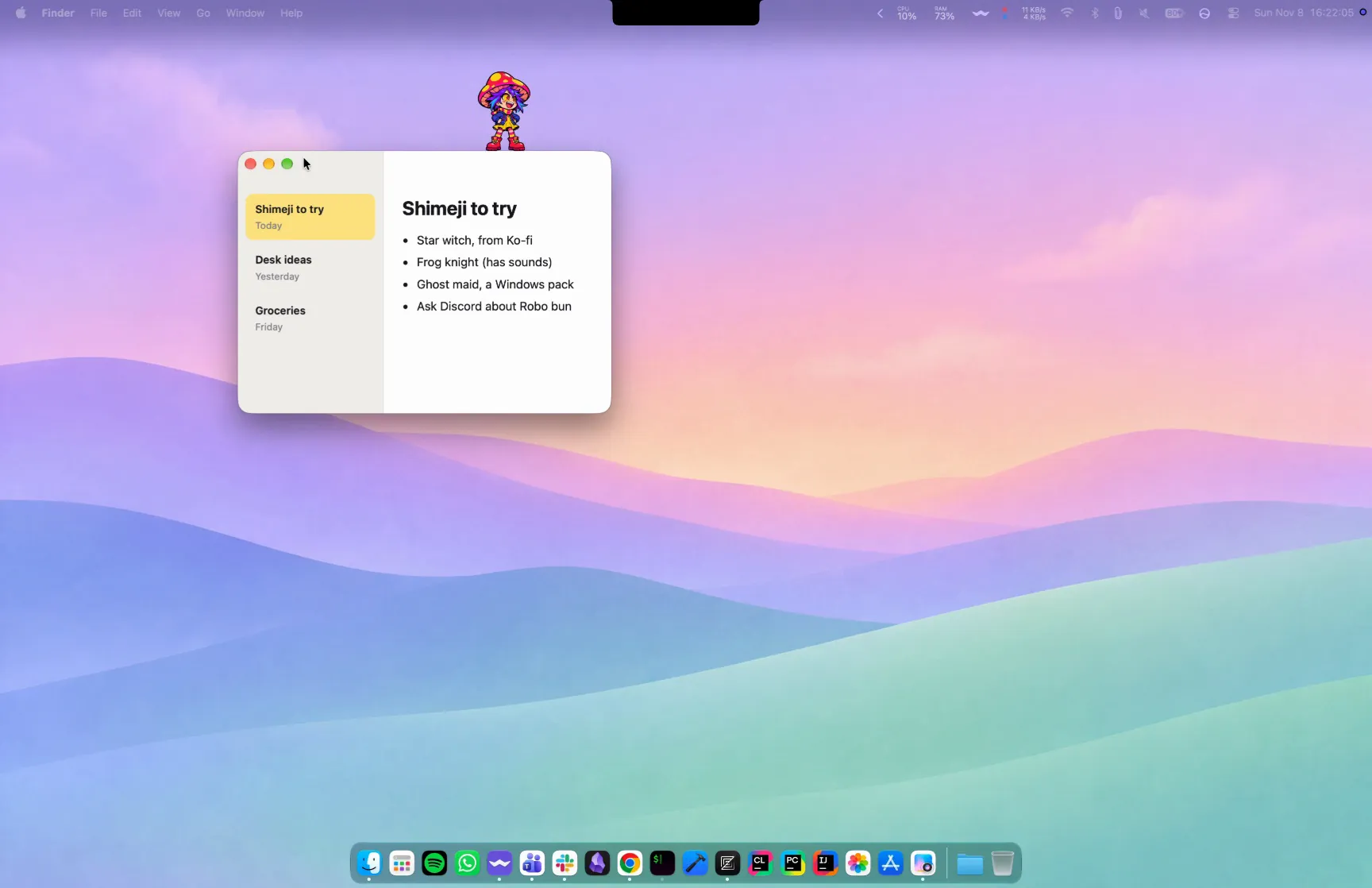
There are 2 different actions to separate. Reading a window's position lets a character stand on its edge, climb it or ride along when you drag it. Moving that window for you is a different operation, and it requires permission.
Shimejiko gets window geometry from macOS without requesting Screen Recording. Its window movement code uses Accessibility, and only proceeds when Throw windows is enabled and Calm mode is off. An allowed permission is therefore not an instruction to start throwing every window.
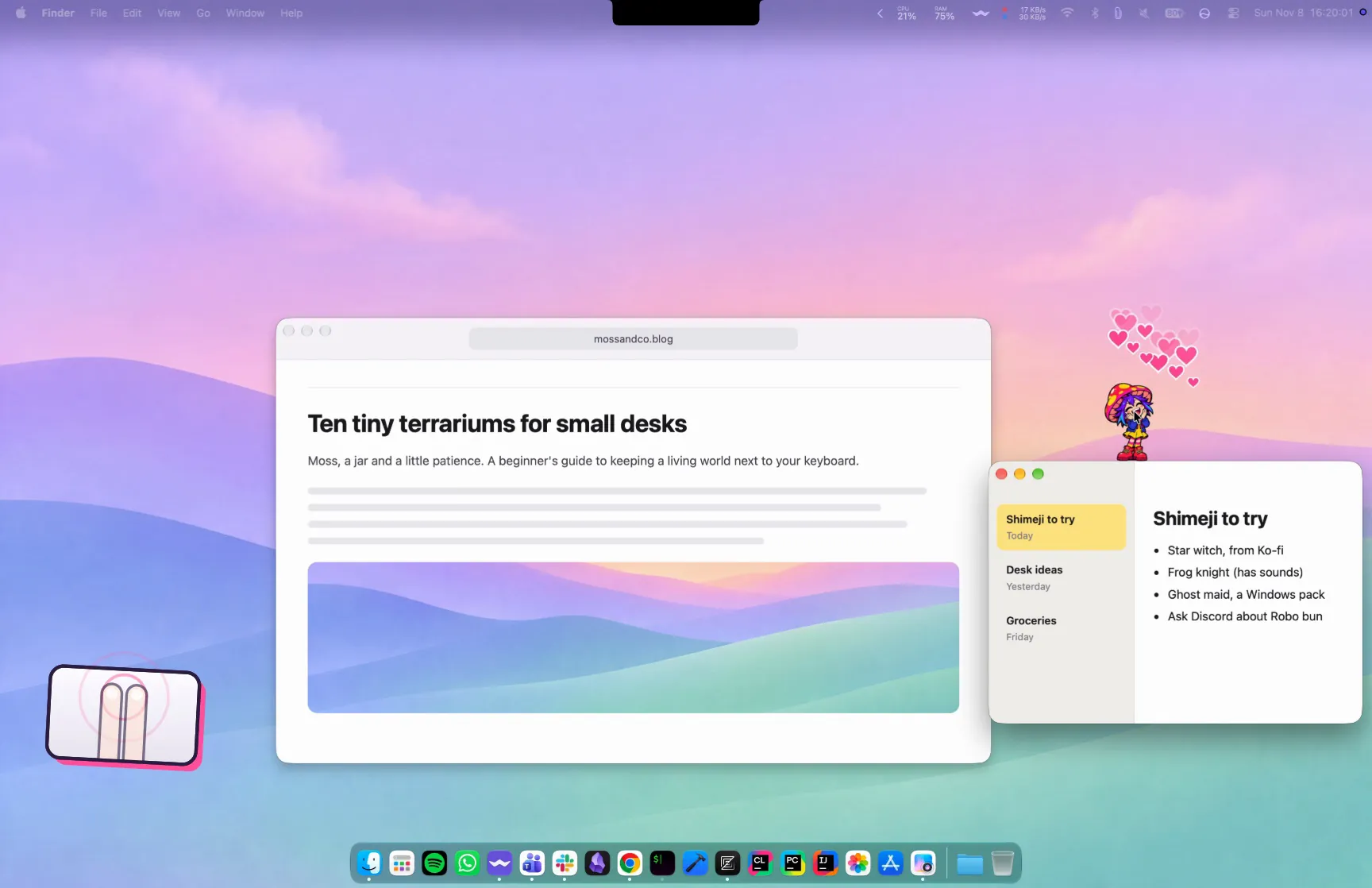
This real app recording shows a character riding a window as it is dragged. It illustrates window riding, not the Accessibility approval process.
What works if you leave permission off?
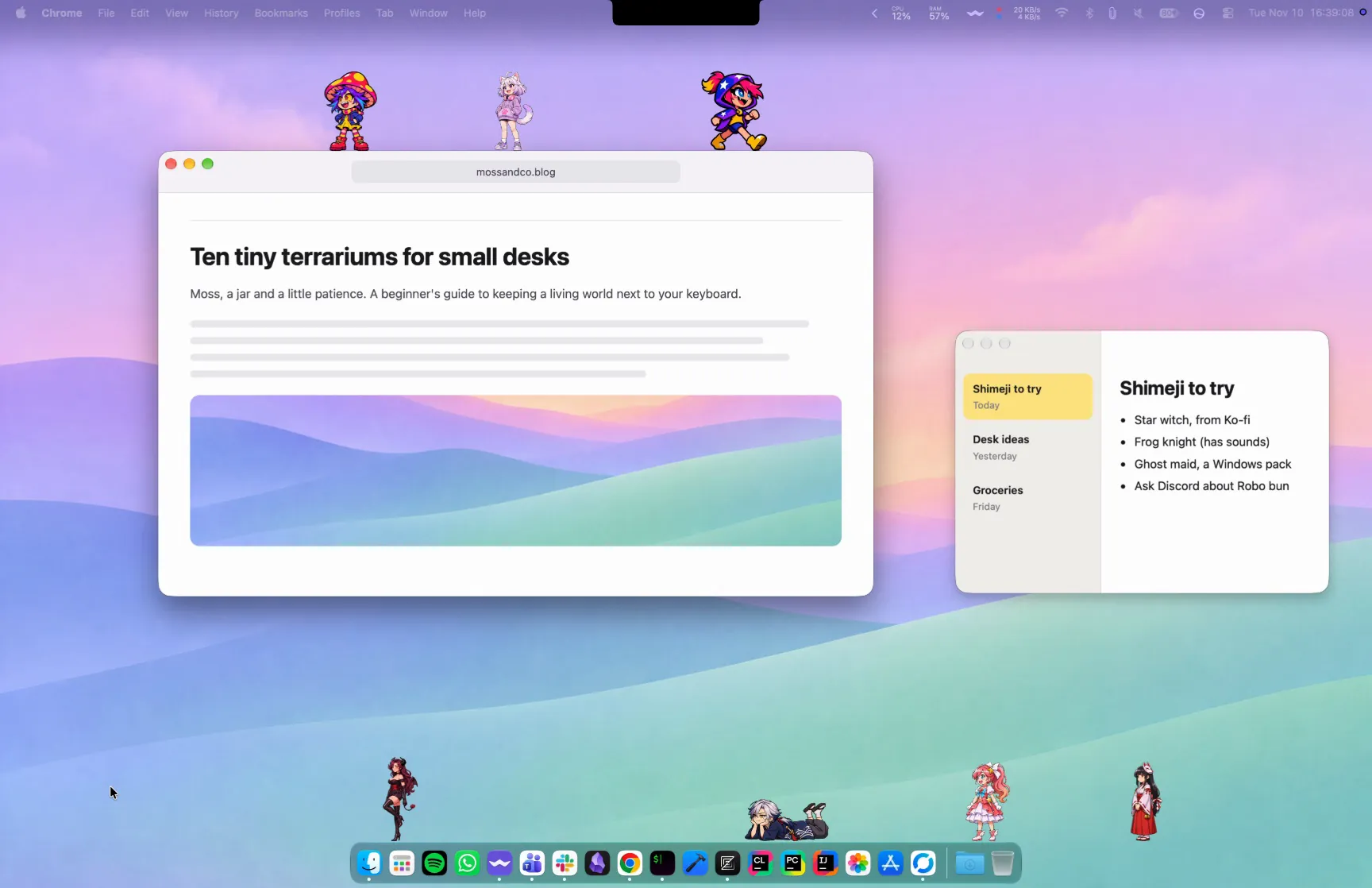
Your friends can still walk around their desktop world. Climb and ride windows has its own switch under Settings → Behaviors, separate from Throw windows. If climbing is what you want, check that switch before changing a macOS privacy permission.
Window selection also matters. Shimejiko follows the active app's eligible window, and its excluded-app list keeps friends off certain apps' windows. A character staying off one window is not, by itself, evidence of missing Accessibility access. Pack behaviors affect what a character chooses to do, too.
Is Accessibility the same as screen recording or reading text?
No. Screen Recording is a separate macOS permission. The window code uses bounds and owner information rather than screen pixels or window titles. You do not need to add Screen Recording access to make window throwing work.
Typing cheer counts the timing of key-down events, ignores held-key repeats and does not read typed characters. It detects typing activity without reading the content of your text.
Accessibility is still a powerful system permission, not a narrowly limited “window outlines only” grant. The app's implementation describes what it uses that access for. It does not change what macOS permission means. For broader download and pack questions, read our Shimeji safety guide.
How do you grant only the access you want?
- Use the official Shimejiko download, and open the app you intend to keep using.
- In Shimejiko, open Settings → Behaviors. Beside Window access, choose Allow… if you want window throwing or typing cheers.
- In macOS System Settings → Privacy & Security → Accessibility, enable Shimejiko. Authenticate through macOS if asked, not through a download website.
- Return to Shimejiko. Enable only the interactions you actually want. You can leave Throw windows off even while Accessibility is allowed.
macOS wording can vary with system version and language. The app includes a permission guide and checks again when you return. Some systems require a relaunch before a running app recognizes the new permission; Shimejiko includes handling for that case.
How do you revoke access or troubleshoot a stuck setting?
To revoke it, turn Shimejiko off in that same macOS Accessibility list. Return to the app, and quit and reopen it if its status has not caught up. Losing access disables the permission-dependent interactions; it does not mean you must uninstall your companions.
If access appears enabled but an interaction still does not work, make a small, reversible check:
- Confirm you are opening the same installed copy of Shimejiko that you approved, especially after moving or updating the app.
- For window throwing, check Throw windows, Calm mode, and the excluded-app list under Settings → Behaviors. Not every app window allows the same operations.
- For typing cheers, check Typing cheer under Settings → Mac magic. A cheer follows sustained typing, not every individual key press.
- Test on an ordinary desktop window, then return to your usual layout. If needed, restart Shimejiko before changing any other permission.
Do not disable macOS security protections, grant unrelated permissions or reset every app's privacy settings to fix a missing animation. On a managed Mac, ask your administrator if the switch is unavailable.
Frequently asked questions
Do I need Accessibility just to use Shimejiko?
No. You can keep a desktop companion and use window climbing without it. Download Shimejiko free and start with the interactions you are comfortable enabling.
Can I allow typing cheers but keep window throwing off?
Yes. Accessibility provides the required system access, while Throw windows remains a separate app setting. Leave that switch off if you do not want friends moving windows.
Will granting permission make every character throw windows?
No. Permission is one condition, not a guarantee of a particular animation. The app settings, selected window and character pack's supported behaviors also matter.