Oneko for Mac: the little cursor-chasing cat and your options

Also in日本語한국어繁體中文简体中文EspañolDeutschPortuguês (Brasil)Français
Quick answer
Want oneko on your Mac? Compare native ports, understand the original X11 cat, and decide whether you want a cursor chaser or a Shimeji companion.
Download for MacWant oneko for Mac? Use a native Mac port for a little cat that follows your pointer across desktop apps. Start with crgimenes/neko for a downloadable universal app, or oneko-swift for a menu-bar version on macOS 13 or later. Shimejiko is a different choice: Shimeji characters that inhabit your Dock and windows, not a drop-in replacement for oneko.
This comparison checks project documentation on 12 November 2026. It is not a hands-on performance test or an exhaustive list of every fork.
What is oneko, and why are there so many cats?
Neko, xneko and oneko belong to a long-running family of cursor-chasing desktop pets. The Neko source archive preserves versions from the NEC PC-9801, classic Macintosh and X Window System, including a 1993 oneko source tree. These names describe related projects, not one current app with a single download button.
The distinction matters on a Mac. The original X11 program and a modern native macOS app live in different windowing environments. The developer of neko-mac explicitly says the Cocoa port was made because running Oneko on Mac OS X did not put the cat in front of Mac applications.
A cat embedded in a website is different again. It may follow your pointer inside that page, but that alone does not make it a companion above Finder, Notes or your other apps. Choose by where you want the cat to appear, not just its name.
Oneko for Mac: which option fits?
| Option | Best fit | Important drawback |
|---|---|---|
| crgimenes/neko | A downloadable cursor cat for Intel and Apple silicon | Advanced customization uses a configuration script or command-line flags |
| oneko-swift | A native menu-bar cat with speed and display controls | The project says the app is not notarized, so first launch needs extra care |
| mdonoughe/neko-mac | Exploring an older Cocoa interpretation | No themes, and quitting is less obvious because there is no Dock icon |
| Shimejiko | Shimeji characters around the Dock and windows | Not an oneko player; requires macOS 14, and some features cost extra |
These are separate projects. A feature in one is not evidence that another supports it, and a recognizable cat sprite does not establish who built the app.
The downloadable route: crgimenes/neko
The project README offers neko-darwin-universal.zip for both Intel and Apple silicon. Download it from the project's Releases page, unzip it, move neko.app to Applications and open it. You do not need Go or developer tools to use that prebuilt app.
The maintainer describes the Mac app as signed and notarized. That is a project statement, not our independent verification of a downloaded binary. The project is also explicit that this is a Go reimplementation, not the original program's code with a new installer.
The compromise is customization. Speed, scale, sound, click-through behavior and sprite sheets are documented through a Filo configuration file or command-line flags. Fine if you enjoy tweaking files; less inviting if you expect every option in a preferences window. Try its defaults before deciding you need a custom setup.
The menu-bar route: oneko-swift
oneko-swift documents macOS 13 Ventura or later and a universal build. Its menu-bar controls include show/hide, speed, character variants and display selection. The overlay lets clicks pass through, so the cat is not intended to intercept your work.
Its meaningful tradeoff is distribution: the README says it is not notarized. Do not treat a macOS warning as a decorative obstacle or disable system-wide protection for a pet. Read the project's current instructions, confirm the download came from its own Releases page, and choose another app if you are not comfortable assessing that trust decision.
The older mdonoughe/neko-mac is worth knowing about, but its README says themes are unsupported and closing it means using Activity Monitor or Terminal. It is not our first suggestion for someone who wants an obvious everyday interface. We have not established compatibility with current Macs from that README alone.
When Shimejiko makes more sense
Choose Shimejiko if the attraction is a character living around your work rather than a faithful cursor-chasing cat. It runs Shimeji packs and offers characters that walk on the Dock and climb windows. That is a different style of companion, not a claim to run oneko code or load every oneko sprite sheet.
Shimejiko requires macOS 14 or later on Intel or Apple silicon. The download is free. Pro is $5.99 once, and original paid Shop packs are separate purchases. The free app lets you import packs and display 1 character type with up to 3 copies. Multiple different types together need Pro. See the free versus Pro guide before buying.
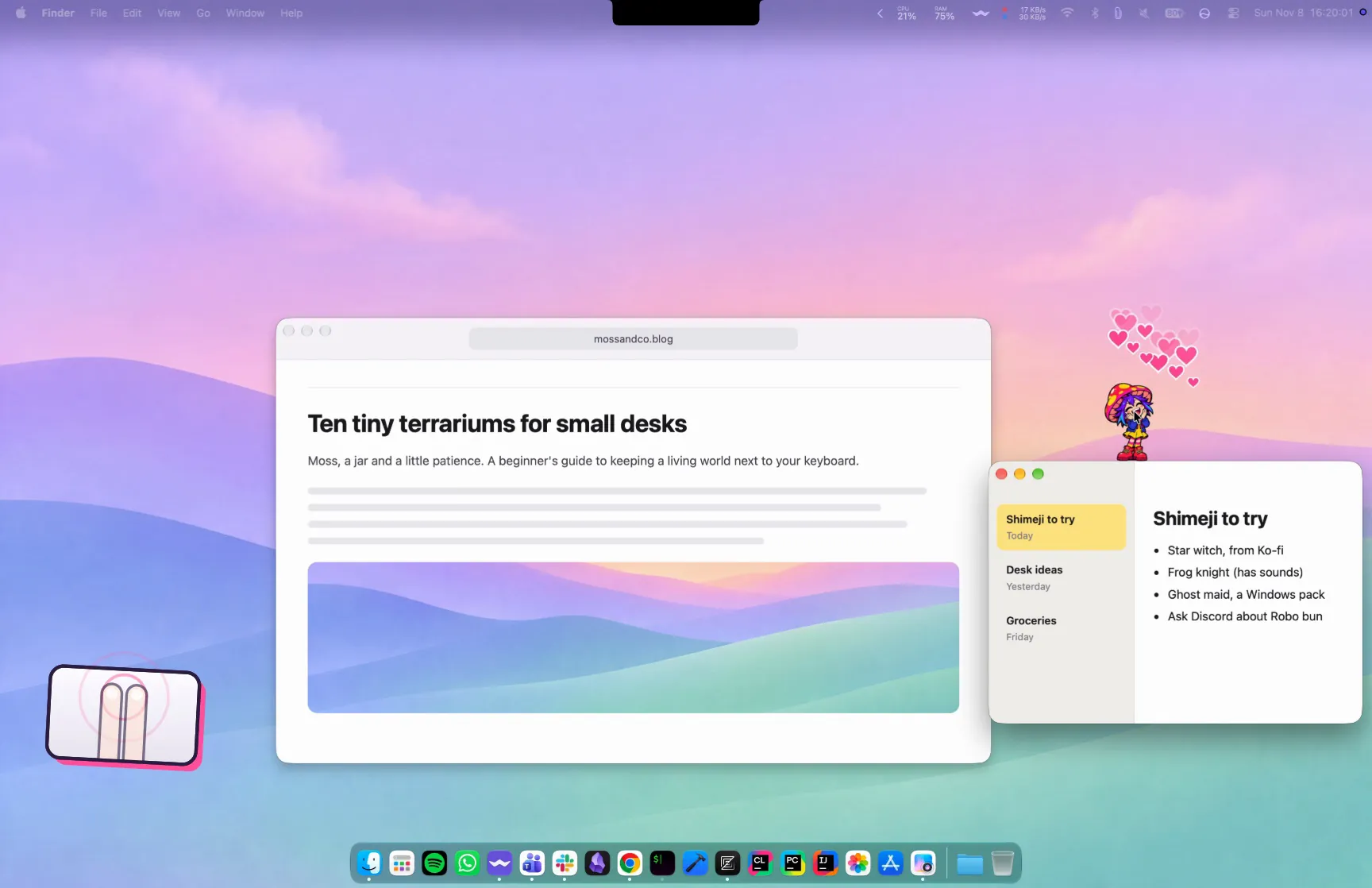
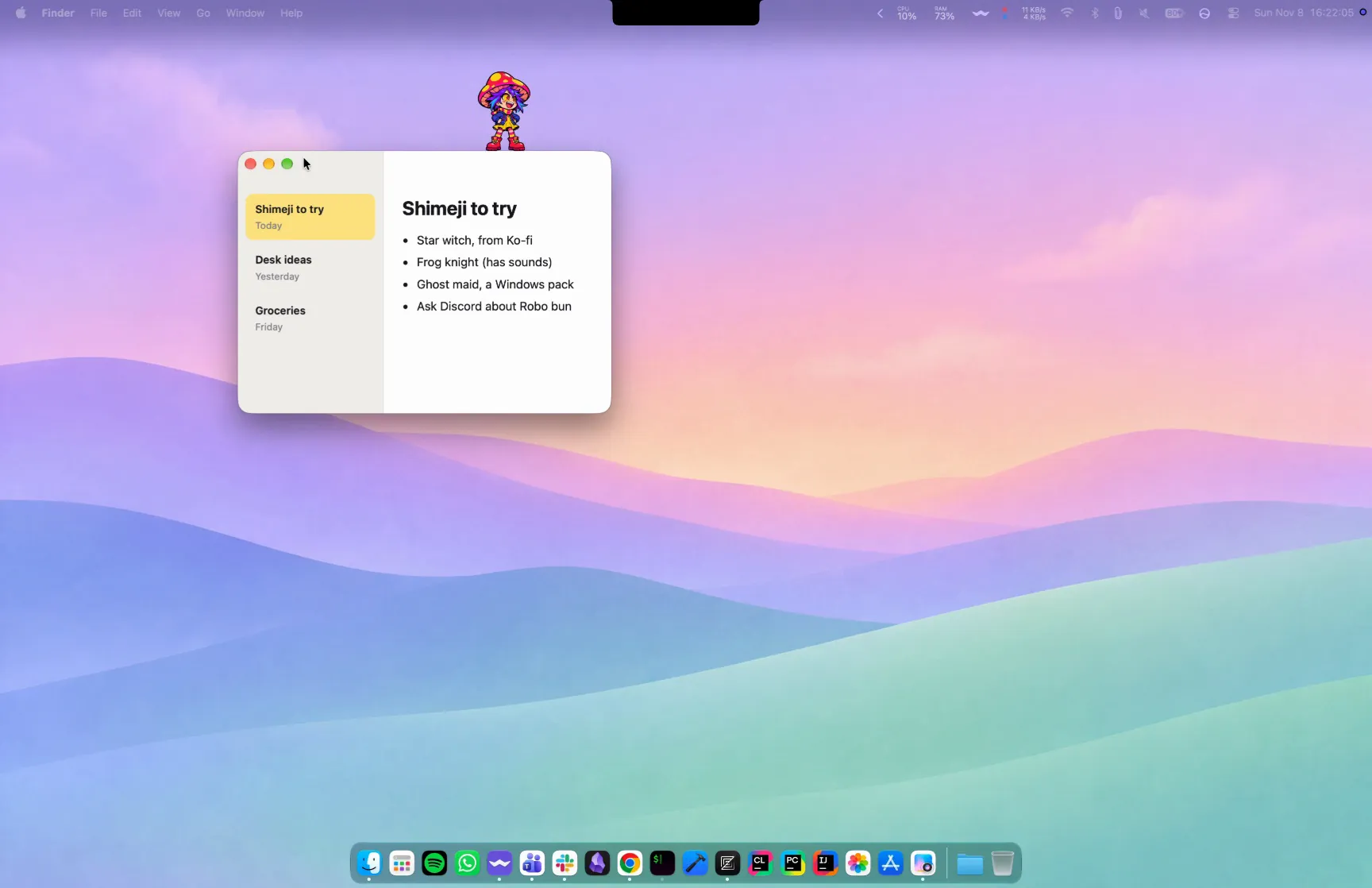
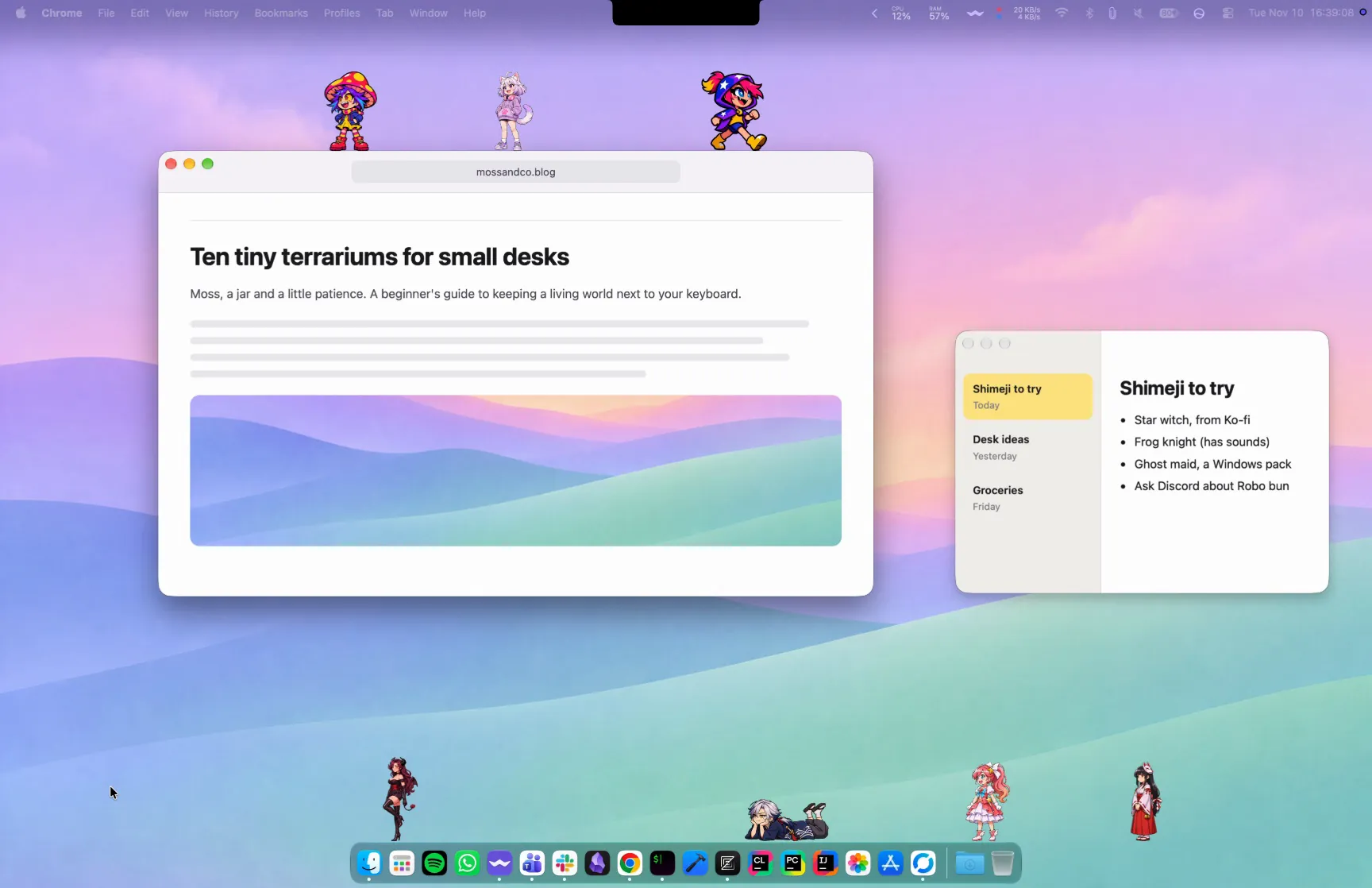
The recording below shows Shimejiko with several characters, not oneko. It demonstrates the alternative's desktop behavior; it does not mean every pictured character comes with Pro.
Questions before installing
Can I import an oneko skin into Shimejiko?
Do not assume so. An oneko sprite sheet and a Shimeji pack have different structures. Use the formats documented by the app you choose. A picture of a cat is not, by itself, a compatible character pack.
Which one should I try first?
For the familiar pointer-following cat, start with crgimenes/neko's prebuilt Mac app. For menu-bar controls, consider oneko-swift after reading its first-launch caveat. For Shimeji characters, start with Shimejiko free rather than buying Pro in advance.
Will a desktop cat stay out of my meetings?
Test hiding or quitting before a call and check your sharing preview. Being click-through does not mean being excluded from a screen recording. In Shimejiko, ⌥⌘H hides the companions; for another port, use its own hide or quit control.